Physics-Based Animation
Rigid Body Simulation
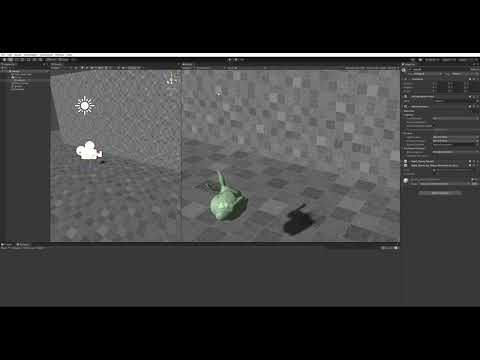
This project is part of the Games103 course, an introduction to physics-based animation. The course focuses on various foundational methods for simulating physical phenomena in animations and games. For this specific project implements a Rigid Body Simulation using Leapfrog Integration for position and orientation updates, along with collision detection and response.
You can view the demo of this simulation in the video below:
Cloth Simulation
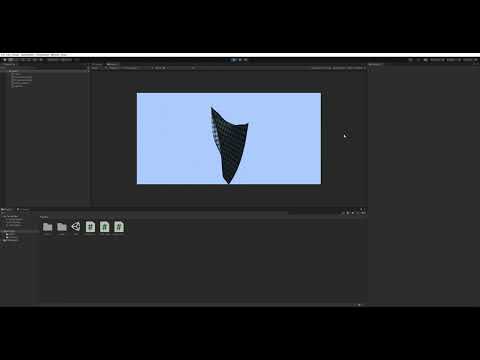
This project implements a Cloth Simulation using both Implicit Cloth Solver and Position-Based Dynamics (PBD) techniques.
- Implicit Cloth Solver
- Initial Setup: Applied damping to vertex velocities and calculated initial position guesses.
- Gradient Calculation: Computed the gradient of the objective function using vertex positions and forces (spring and gravity).
- Vertex Update: Used a simplified Newton’s method with a diagonal Hessian matrix to iteratively update vertex positions.
- Sphere Collision: Detected collisions with a sphere and applied impulse-based responses to colliding vertices.
- Position-Based Dynamics (PBD)
- Initial Setup: Dampened velocity, applied gravity, and updated vertex positions.
- Strain Limiting: Implemented Jacobi-based position updates to preserve edge lengths and prevent stretching.
- Sphere Collision: Handled vertex collisions with a sphere using the same method as the implicit solver.
You can view the demo of this simulation in the video below:
 S
S
Water Wave Simulation
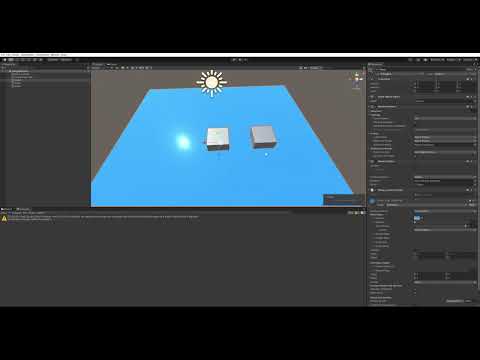
This project implements a Water Wave Simulation using a simplified shallow wave model and two-way coupling techniques.
- Shallow Wave Model
- Ripple Simulation: Simulated water surface ripples by updating vertex heights based on neighboring vertices and damping factors.
- User Interaction: Allowed users to add random water drops, adjusting vertex heights to maintain constant water volume.
- Two-Way Coupling
- Rigid Body Dynamics: Applied computed pressures as forces and torques to blocks, enabling mutual influence between blocks and water.
- Collision Handling: Managed interactions between blocks and water surface, ensuring realistic responses to movements and collisions.
You can view the demo of this simulation in the video below:
About Games103
Games103 course is a foundational course that introduces students to a range of physics-based animation. It covers the simulation of physical phenomena such as rigid body dynamics, soft body deformation, fluid dynamics, and cloth simulation.